
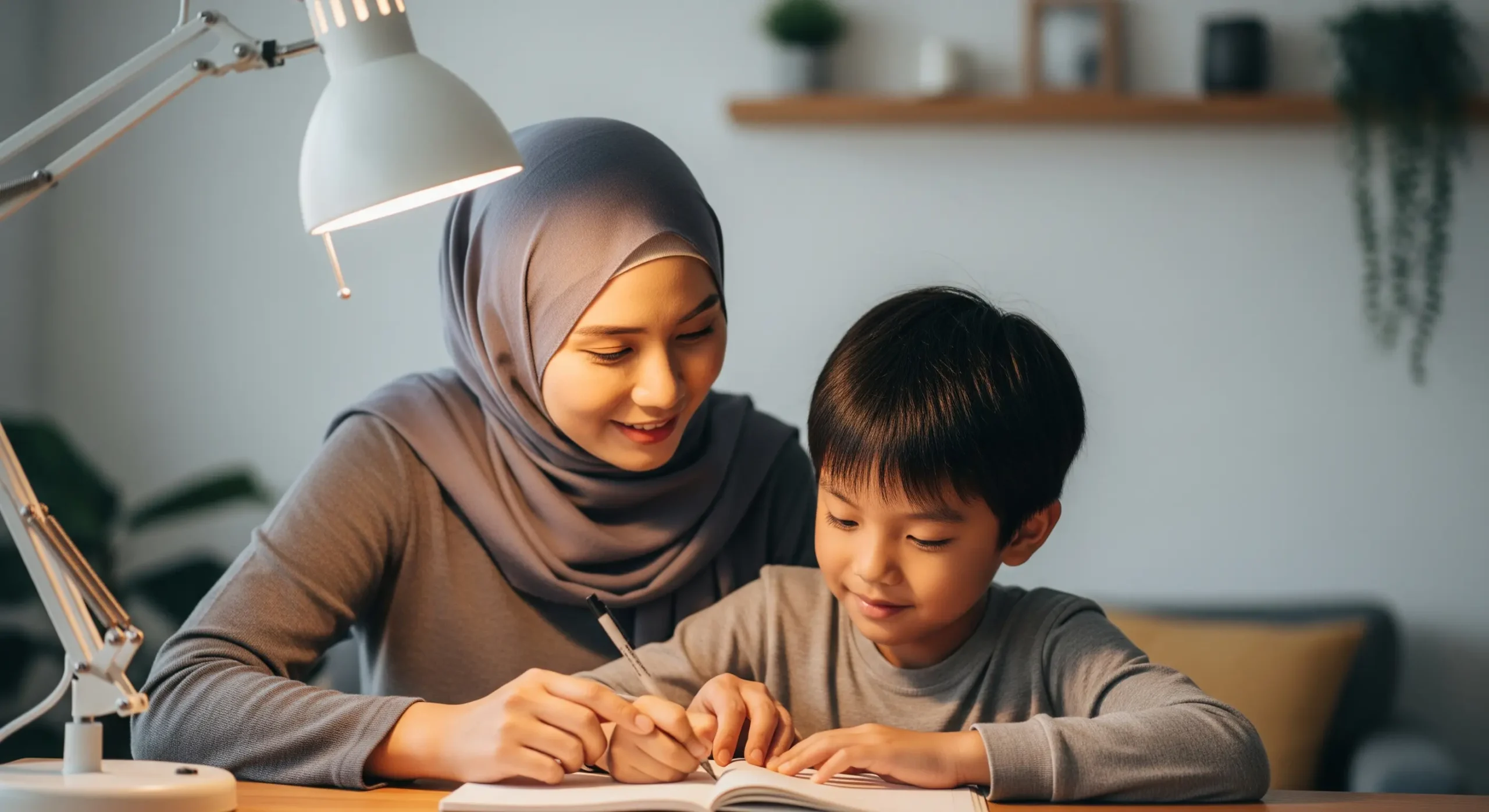
Raising children with faith has never been a solo journey. And in today’s world, especially in societies where Islam and its values are not at the forefront, it can sometimes feel overwhelming.
Many parents quietly ask themselves:
Am I doing enough? Am I doing this right? What if I get it wrong?
The truth is, guidance ultimately comes from Allah. But we are still entrusted with effort. With intention. With care.
And reassuringly, we are not starting from zero.
Children, Faith, and the Natural Inclination
The Prophet ﷺ taught us that every child is born upon a natural disposition, an innate inclination towards belief and meaning, until it is shaped or altered by their surroundings. This idea is not only spiritual. It is increasingly supported by modern research. Studies from institutions such as Oxford have shown that children naturally gravitate towards belief in a higher power and purpose, even without explicit instruction.
In other words, faith is not something we force into children. It is something we protect, nurture, and guide.
The question then becomes:
How do we preserve that God given instinct in a world full of noise, mixed messages, and competing values?
Parents as the First and Most Powerful Teachers
Before schools, before teachers, before institutions, parents are the first role models.
Children do not learn faith primarily through lectures. They absorb it through observation.
They notice:
- how you pray or do not pray
- how you speak to others
- how you handle stress, anger, kindness, and gratitude
- what feels normal in your home
A child who grows up seeing prayer as part of daily life, hearing the adhan softly in the background, and witnessing respect and mercy in their parents internalises faith as something lived, not announced.
That said, modern life is busy. Not every parent can or should carry the entire weight of education alone. The saying it takes a village to raise a child holds real wisdom. The balance lies in staying involved without disconnecting, supporting your child’s learning without outsourcing your values entirely.
Faith is not built by absence, nor by pressure. It is built through presence.
Why Ages 4 to 8 Matter So Much
Between the ages of 4 and 8, a child’s brain is undergoing rapid development in language acquisition, emotional security, habit formation, and moral understanding. This is a sensitive window. Children at this stage learn through repetition, imitation, emotional connection, and routine, not abstract reasoning.
What this means practically is simple but powerful. Bond precedes belief, and connection precedes correction.
A child who feels emotionally safe and deeply connected to their parents is far more receptive to guidance. When that bond exists, upbringing becomes gentler and more effective, not because the child is perfect, but because trust is already there.
This is also the age where the home must feel distinct. Not through slogans or constant reminders, but through atmosphere. A house where faith is lived quietly but consistently feels different. Children sense that.
And there is a profound spiritual principle here. When parents align themselves with their Creator, Allah takes care of their offspring in ways we could never plan for ourselves.
Being Involved Without Being Overbearing
There is a saying often shared among parents and educators:
If you are not closely involved in your child’s schedule, something else will fill it.
In today’s world, that something else may be peers, media, school environments, or values introduced without context.
This does not mean control. It means awareness.
Being aware of:
- what your child is learning
- what ideas they are being exposed to
- how they are processing what they hear
This applies to all schools, Islamic or otherwise. In fact, involvement matters even more when parents assume everything is taken care of.
For families whose children attend non-Islamic schools, this can be a positive and well-rounded experience when supported thoughtfully.
Learning about other religions and belief systems is an important part of living respectfully in a pluralistic society. It helps children develop empathy, understanding, and the ability to engage thoughtfully with difference.
At the same time, some parents understandably choose to focus first on helping their children develop a secure understanding of their own faith in Islam. A strong foundation can give children the confidence and clarity to approach other perspectives with openness rather than uncertainty.
In the UK, parents have the right to request that their child be withdrawn from specific religious activities or lessons, and many schools are accommodating of this.
This is not about fear but rather appropriate timing.
Nurturing Faith Between Ages 4 to 8: Laying Foundations and Building Momentum
Ages 4 to 5: Gentle Beginnings and Familiarity
At ages 4 to 5, faith building should be gentle, light, and inviting. This is a stage of familiarity, not pressure.
Introducing Qur’an memorisation softly helps the tongue and ear grow accustomed to Arabic. The same applies to prayer. Children learn best by standing beside their parents and imitating them.
Think of this stage as planting seeds, not harvesting fruit.
Ages 5 to 6: Gentle Structure and Meaning
Between 5 and 6, children begin to ask why. Their curiosity deepens, and their ability to understand simple concepts expands noticeably. This is a beautiful stage to keep the pace going, gently adding structure without pressure.
At this age, parents can begin introducing:
- simple foundational beliefs, Aqeedah, in an age appropriate way
- basic Islamic studies concepts through stories, conversations, and everyday moments
- short reflections about Allah’s mercy, creation, and care
This does not require formal lessons at home. In fact, what matters more is how faith is spoken about. When parents talk openly and positively about what their child is learning, whether through a teacher, class, or story, it reinforces importance and excitement.
Children at this age are deeply influenced by tone. When they see their parents genuinely interested, curious, and even amazed by Islamic knowledge, it sends a powerful message, this matters.
And if parents feel unsure about how to explain something, that is completely okay. Seeking support from trusted teachers or structured learning environments is part of responsible parenting, not a shortcoming. What matters most is that faith learning is acknowledged, discussed, and valued at home, even if parents themselves are learning alongside their child.
Ages 6 to 8: Building Momentum with Confidence
From 6 to 8, something shifts. When the foundations have been laid with care, this is often the stage where parents begin to see the fruits of their effort.
Habits feel more natural. Familiarity with prayer, Qur’an, and Islamic language begins to show. Children may remind parents of prayer times, repeat verses confidently, or ask deeper questions about belief and purpose.
This is the time to gently increase expectations, not abruptly, but consistently. Faith, like any meaningful skill, grows through steady effort. Once momentum is established, it is important to keep climbing rather than pausing.
Parents often describe a sense of relief at this stage. A quiet reassurance that in shā’ Allah, things are moving in the right direction. And that feeling is valid. But it is also important to remember, this journey is about effort and persistence, not perfection.
There is no universal benchmark for:
- how much Qur’an a child should have memorised
- which surahs must be completed by which age
- when tafsir, du‘as, or sirah should be introduced
Every child is different. Pace, personality, and learning style vary, and Islam accommodates that beautifully.
These age guidelines are not rules. They are nurturing signposts. When parents understand their responsibility, uphold it with sincerity, and maintain good intentions, the finer details often fall into place naturally.
And when they do not, support exists.
At Noor Horizon, we are here for families who want guidance at any level, including the nitty gritty when needed. No parent should feel lost, overwhelmed, or alone in this journey. Despair has no place where intention and effort are present.
You are doing more than you realise, and it counts.
A Final Reassurance for Parents
Raising children with faith is not about perfection. It is about showing up, staying consistent, and turning back to Allah again and again.
There will be challenges along the way, and that is a natural part of the journey. But when intentions are sincere and effort is present, Allah places barakah in what seems small.
At Noor Horizon, we are here to walk alongside families. Never feel despair. Support exists, guidance exists, and you are not alone.
You are doing more than you realise, and it counts.